
Andy’s Astronomy: The Planet Mongo, Home of Ming
Science fiction has brought to life an interesting variety of planets, some real and some not.
Some of you that have been around for a long time might remember that in 1934 readers of the newspaper comic strip Flash Gordon were introduced to the planet Mongo.
Mongo was the creation of Alex Raymond and Don W. Moore. Raymond was the comics artist behind Flash Gordon and Moore was a ghostwriter and magazine editor.
As envisioned, Mongo was about half the size of Earth, had an atmosphere comparable to Earth’s, with gravity slightly less than Earth’s, and four moons. It was a rogue planet that drifted into our Solar System.
By ANDY KOBER
Science fiction has brought to life an interesting variety of planets, some real and some not.
Some of you that have been around for a long time might remember that in 1934 readers of the newspaper comic strip Flash Gordon were introduced to the planet Mongo.
Mongo was the creation of Alex Raymond and Don W. Moore. Raymond was the comics artist behind Flash Gordon and Moore was a ghostwriter and magazine editor.
As envisioned, Mongo was about half the size of Earth, had an atmosphere comparable to Earth’s, with gravity slightly less than Earth’s, and four moons. It was a rogue planet that drifted into our Solar System.
The planet was inhabited by no less than 17 races that included such esoteric names such as Lion Men, Gillmen, Blue Dragon Men, Fire People, Death Dwarfs and more living on two continents known as Tropica and Unexplored. It was also inhabited by very large monsters, similar to dinosaurs. In the early depictions, all but two of the races that inhabited Mongo lived under the tyrannical Ming the Merciless, though each race had its own leaders.
In the comic strip, Flash Gordon leads rebels against the oppressors and against Ming.
As the Flash Gordon story evolves and is carried on radio followed by television, the story and the planet Mongo changes.
A drawing of the planet Mongo and maps of where the various races lived were produced by Arlene Williamson and Jim Keefe, based on descriptions used in the various storylines.
Of course, the planet Mongo was a literary creation as were many planets used in comic strips, comic books, radio, television, and movies. There is no known planet that is even remotely similar to Mongo.
Keep your eyes on the sky for passing fireballs.
Meteors can flash across the sky anytime, day or night, and extraordinarily bright meteors are often referred to as fireballs — and they are spotted quite often.
On Wednesday, Feb. 18, 29 people across Arkansas, Kansas, Oklahoma and Texas, reported seeing a fireball. The fireball was first reported at 7:20 pm Central Time by a skywatcher in Quitman, TX, who reported it to be orange, yellow, and white in color. The fireball was seen as far north as Derby, KS, as far east as Springdale, AR, as far south as Brownsboro, TX, and as far west as Bridgeport, TX. The fireball appeared to be travelling from the southeast to the northwest.
No one reported hearing the fireball make any noise but one skywatcher witnessed it fragment into pieces. The fireball was captured on one photo.
Anyone seeing a fireball is urged to report the sighting to https://amsmeteors.org
Going outside and looking at the sky, especially the night sky, can be fun and educational for the entire family.
There are a number of free apps available to help identify stars and constellations, and some of the apps will show satellites.
Happy skywatching!
Before you go...
Thanks for reading The-Star-Mercury-Vindicator. We hope this article added to your day.
We are a nonprofit, local newsroom that connects you to the whole story of Meriwether County. We live, work and play here. Our reporting illuminates and celebrates the people and events that make West Georgia unique.
If you appreciate what we do, please join the readers like you who help make our solution-focused journalism possible. Thank you
Author

Related Articles

DID YOU KNOW …? Did the man credited with inventing the game Monopoly™ actually invent it?
Now we’re ready to close out February!
The second month of the year (and the shortest) is about to be history. Was yours a good one? I certainly hope that it was.
Spring is right around the corner, you know. Three more weeks or so, and we’ll celebrate the annual renewal of the world, at least in the Northern Hemisphere. Those south of the Equator will be entering autumn.
Interesting, that.
So is trivia – interesting, I mean. Enjoy!
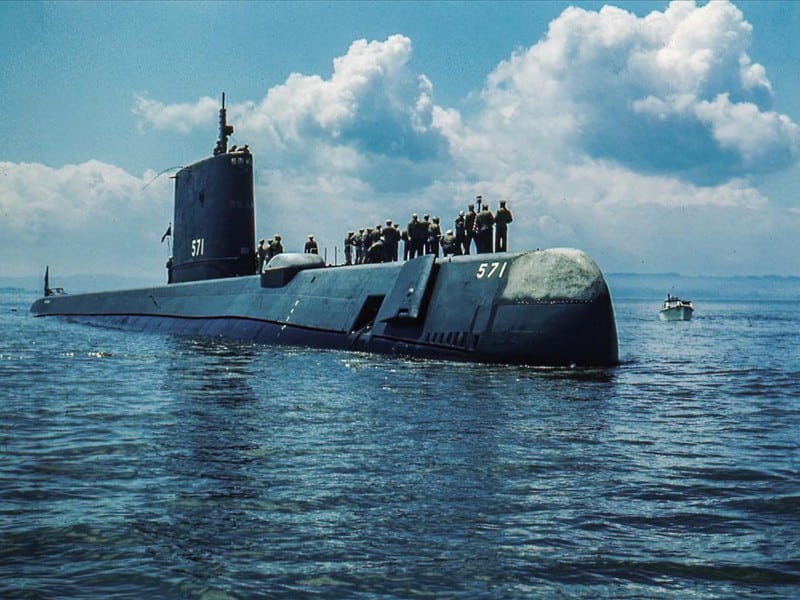
This Week in American History: 1980 – USS Nautilus is Decommissioned
• Mar. 3. Today in 1980, the submarine USS Nautilus is decommissioned. Launched in 1954, Nautilus enjoyed a storied career as the world’s first nuclear-powered boat, first nuclear-powered submarine, and the first submarine to complete a submerged transit of the North Pole, serving for 26 years. Named for Captain Nemo’s fictious submarine in Jules Verne’s Twenty Thousand Leagues Under the Sea today the Nautilus is a museum ship at the Submarine Force Library and Museum in Groton, Connecticut. She has been designated as a National Historic Landmark and visited by an average of about 250,000 people per year.

Poking the Bear
Last Monday, on President’s Day, I had cinnamon spice oatmeal for breakfast.
Normally, of course, that isn’t news. That isn’t even worthy of a mention in passing. But this time, it was different.
You see, the last time I had cinnamon spice oatmeal for breakfast was the morning of July 31, 2025. During that meal, I had a heart attack. (True, I treated it as if it were acid reflux, and it was four days before I did anything about it, but that’s another story – one I’ve already told in this space.)
I’m happy to report that history did not repeat itself, and I didn’t have another attack while enjoying my cinnamon spice repast.
But it was definitely an episode of “poking the bear.”