Andy’s Astronomy: The Night Lights are Amazing
This has been a rather important week in astronomy.
In 1930, astronomers at the Lowell Observatory in Flagstaff, Arizona, announce the discovery of Pluto by astronomer Clyde Tombaugh though after decades of being considered a planet, Pluto has since been reclassified as a dwarf planet.
Tombaugh was a prolific astronomer who was self-educated in the field and built some of his own telescopes using spare parts and grinding his lens by hand. During his lifetime, Tombaugh discovered or identified hundreds of asteroids, star clusters, galaxies and variable stars.
By ANDY KOBER
This has been a rather important week in astronomy.
In 1930, astronomers at the Lowell Observatory in Flagstaff, Arizona, announce the discovery of Pluto by astronomer Clyde Tombaugh though after decades of being considered a planet, Pluto has since been reclassified as a dwarf planet.
Tombaugh was a prolific astronomer who was self-educated in the field and built some of his own telescopes using spare parts and grinding his lens by hand. During his lifetime, Tombaugh discovered or identified hundreds of asteroids, star clusters, galaxies and variable stars.
Established in 1894, the Lowell Observatory is among the oldest in the US and in 1965 was designated a National Historic Landmark. It remains an active observatory today.
Our favorite amateur astronomer Ms. Lynn reminds that was this week in 1781 that German-British astronomer William Herschel discovered the planet Uranus. Herschel was viewing the constellation of Gemini when he spotted a new object.
Ms Lynn enjoys looking up at the night sky especially when she can spot Uranus.
With winter slowly losing its grip as the transition to spring begins, the night sky can be quite clear.
Last Friday evening about 11 pm, the planet Jupiter was brilliant. It was located at a compass heading of about 320 degrees, or northwest, and looking up at an angle of about 64 degrees.
Higher than Jupiter and just a bit to the right was the star Pollux, and a bit further to the right was the star Castor.
An evolved red giant, Pollux gives off a slightly orange colored light. It is located about 34 light-years from Earth, which is relatively close considering the vastness of space. Pollux is about nine times the size of our Sun with about twice the mass. In 2006, an exoplanet was discovered orbiting Pollux. That planet is reported to be over twice the size of Jupiter.
Castor is one of the brightest stars in the night sky. It is not a single star but rather a sextuple star that includes three binary stars. The unaided human eye sees the three binary stars as a single star, which is located about 49 light-years from Earth. The two brightest stars that make up Castor are larger than our Sun.
We will continue researching planets found in science fiction soon. In the meantime going outside and looking at the sky, especially the night sky, can be fun and educational for the entire family.
There are a number of free apps available to help identify stars and constellations, and some of the apps will show satellites.
Happy skywatching!
Before you go...
Thanks for reading The-Star-Mercury-Vindicator. We hope this article added to your day.
We are a nonprofit, local newsroom that connects you to the whole story of Meriwether County. We live, work and play here. Our reporting illuminates and celebrates the people and events that make West Georgia unique.
If you appreciate what we do, please join the readers like you who help make our solution-focused journalism possible. Thank you
Author

Related Articles
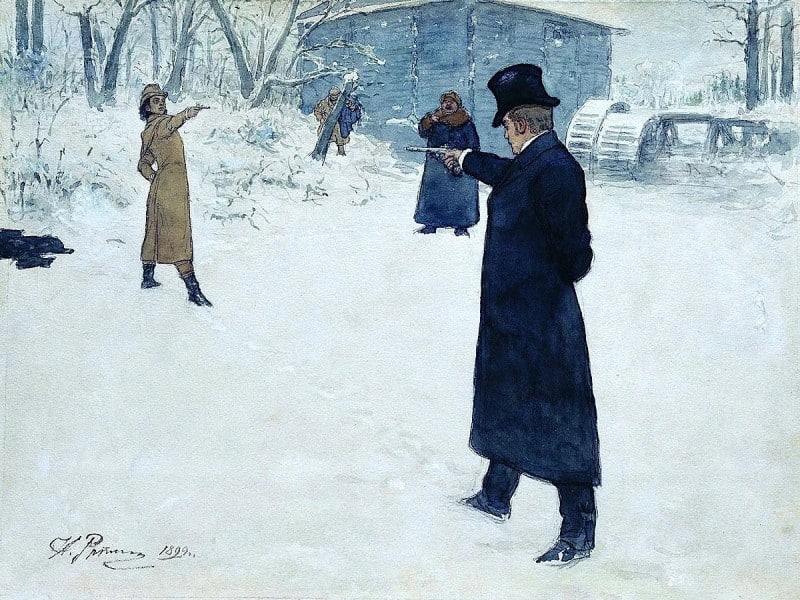
DID YOU KNOW …? What were the results of the last duel ever fought in Canada?
I find it amazing that, over the past few weeks, there is one very important thing I have neglected to mention in the opening lines of the column … baseball.
The greatest of all sports is now deep into spring training, and the 2026 season will begin in just a couple of weeks. I hope your favorite team does well, but not at the expense of my favorite team, the Chicago Cubs.
Baseball is underway, as is trivia! That makes spring worth waiting for!

This Week in American History: 1621 – Samoset Meets Plymouth Settlers
• Mar. 16. In 1621, long before America is a country, Samoset – a sagamore of the Abenaki Native American Indian Tribe, approaches the English settlers at the Plymouth Colony and greets them in English saying, “Welcome, Englishmen! My name is Samoset.” A sagamore was the highest level political chief of the tribal region. Samoset had been visiting the Wampanoag chief, Massasloit, when he went to visit the Plymouth Colony. Samoset and some of the other Native American began trading goods with the settlers.

AI Isn’t Taking Over; We’re Inviting It In
Is Artificial Intellingence really taking over the world? I asked an AI generator about that, and here’s what it said: