
Political Will? More Like Political Won’t
Before you ask, no – I am not abandoning my firm position of not talking about politics, regardless of what the title of this column says. Two things I never discuss are religion and politics, and for primarily the same reason – I have friends on both sides of the issues, and I don’t want to lose any of them.
This column isn’t about politics per se, though. You’ll catch on as we go along.
At the time of this column appearing, we are only a few days away from the scheduled launch of Artemis 2, the first manned mission in the Artemis space flight program. Artemis 2 is the mission that will finally take astronauts back to the Moon – and that’s what I want to talk about.
Why did it take so long to go back to the Moon?
Musings of an Aging Mind
By Jack Bagley
Before you ask, no – I am not abandoning my firm position of not talking about politics, regardless of what the title of this column says. Two things I never discuss are religion and politics, and for primarily the same reason – I have friends on both sides of the issues, and I don’t want to lose any of them.
This column isn’t about politics per se, though. You’ll catch on as we go along.
At the time of this column appearing, we are only a few days away from the scheduled launch of Artemis 2, the first manned mission in the Artemis space flight program. Artemis 2 is the mission that will finally take astronauts back to the Moon – and that’s what I want to talk about.
Why did it take so long to go back to the Moon?
I vividly remember watching, on that warm July evening in 1969, the grainy footage live from the Moon of Neil Armstrong stepping onto the surface. All three of the TV networks were covering the mission, of course – the biggest thing to happen to humanity in the last 2000 years wasn’t going to be preempted by reruns of Leave It to Beaver, that was for sure. It’s generally accepted that CBS had the overall best coverage, what with Walter Cronkite manning the anchor desk.
As something of a science nerd, however, I was watching ABC, because while Cronkite was an avid fan of the space program, ABC’s Jules Bergman was more of a science reporter. I appreciated that, a lot.
It was a wonderful thing, watching the space program build toward that magnificent moment. The fact that we went back to the Moon six more times (with five successes) was the icing on the cake.
Then … nothing.
All of that technology development to land people on the Moon and we just let it die off.
Why?
Because of a lack of political will, among other things.
The power of the purse is held by Congress, and once we’d put people into space – then on the Moon – there didn’t seem to be much of a reason, as they saw it, to go back. Science be hanged, there were problems on Earth that needed to be solved!
I don’t know if you’ve noticed, but in the fifty-plus years since Apollo 17 was the last lunar mission, we haven’t solved any of those problems. In fact, many have gotten worse, despite the massive amounts of money that has been thrown at them.
Finally, though, we’re going back to the Moon, with the Artemis 2 crew doing an updated version of the Apollo 8 mission – go out there and swing around the Moon, then come back. A test of the hardware, you might say, with four astronauts aboard.
While I am admiring the effort and can’t wait to follow the mission, I have to ask … what took so long? Why did we have to wait half a century to do it again?
It comes back to a case of political will – or, in this case, political won’t.
As I understand it, some members of Congress don’t think the space program is worth the money being spent on it. Sure, we get new science, and we get new technology, but the cost is just too high to them. I really don’t understand that kind of opposition.
Others, I hear, want to make sure some of the money gets spent in their districts, no matter how far those districts may be from Florida or Texas. This I can understand, at least a little.
And a few see the value of a vigorous, expanding space program, and those are the ones I can support.
I mean, we even have now a branch of the military concerned with space! The Space Force was a fully logical extension of the U.S. military, even though it isn’t directly concerned with manned space flight (yet).
All that being said, one must remember that the first, most important job of any Congressman is getting re-elected. Making decisions that would solve problems or advance our society could mess up re-election because once the problems are indeed solved, why would we want to re-elect them?
There are numerous reasons we haven’t returned to the Moon in the past half century, but to me, they just don’t pass the smell test. The original plans called for us to have a permanent base there by now, and human exploration of Mars and the Asteroid Belt would also be going on. Those who control the money, however, didn’t see fit. That’s how Elon Musk’s SpaceX took such a commanding lead in space exploration.
Good luck, Artemis 2. Take us back to the Moon, and let’s head for the stars.
Before you go...
Thanks for reading The-Star-Mercury-Vindicator. We hope this article added to your day.
We are a nonprofit, local newsroom that connects you to the whole story of Meriwether County. We live, work and play here. Our reporting illuminates and celebrates the people and events that make West Georgia unique.
If you appreciate what we do, please join the readers like you who help make our solution-focused journalism possible. Thank you
Author

Related Articles
DID YOU KNOW …? Is one of the most famous paintings of the Founding Fathers incorrect?
f you will indulge me, I want to use this week’s column introduction to wish my little brother a very happy 66th birthday.
The day the column appears in its home newspapers is my brother Mark’s birthday, so I want to wish many happy returns of the day to my childhood tormentor, protector, and friend.
Mark and I are as opposite as peas and avocados. He’s an outdoorsy type, who enjoys hunting and fishing … I am a bookworm, happiest indoors and not a big fan of the elements. I never learned to hunt and haven’t fished in more years than I care to think. We both retired as teachers, working for many years in the same system – but often, we had to show papers to prove we were related. We’re that different.
Happy 66th, Mark. Have 66 more!
Now, on to what you came here for … the trivia. Enjoy!

This Week in American History: 1978 -Monster Blizzard Hits Northeastern U.S.
Here is what happened this week in American History.
• Feb. 6. In 1978, a nor-easter – or extratropical cyclone in the northeast US – strikes Connecticut, Massachusetts, New England, New Jersey, Pennsylvania, Rhode Island, and New York City. Some of the areas receive record-breaking amounts of snowfall per hour along with record-breaking overall accumulation of snow ever received from a single storm. The storm packs winds of 86 miles per hour causing whiteout conditions in some areas. Known as the Blizzard of 1978, the storm will claim the lives of 100 people and leave 4,500 people suffering various injuries.
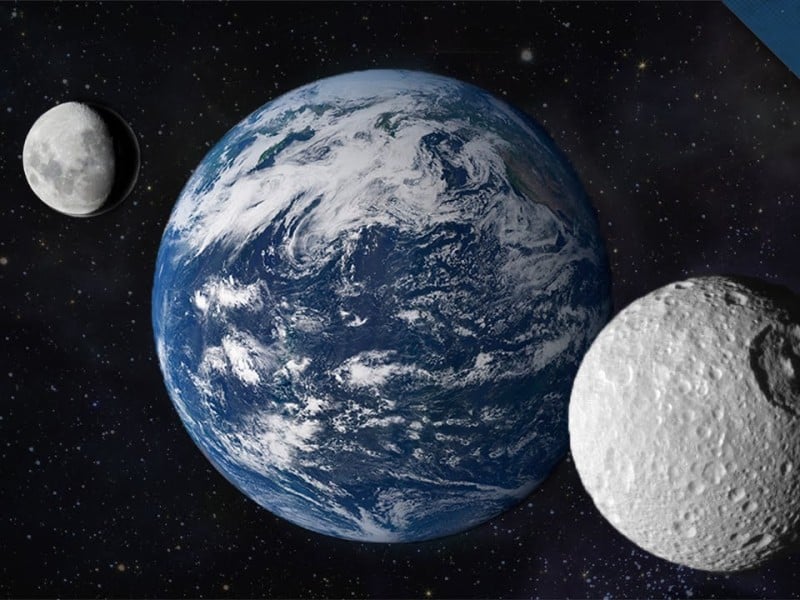
Andy’s Astronomy: Did Earth Once Have a Second Moon?
On Feb. 9, 1913, a very large meteor shower, not typical of regular meteor showers, gave rise to the idea that Earth might have had a second and small moon.
Beginning about 9 pm, the meteor shower was viewed by people in the northeastern US, Canada, Bermuda, and by crew members on ships off the American east coast and as far south as Brazil. The shower could have been watched by many more people except there was cloud cover over much of the northeast US.
It was an unusual meteor shower in a number of respects. While typical meteor showers grow in intensity, this one did not. Instead there were an estimated 40 to 60 meteors that just suddenly appeared. During typical meteor showers the meteors travel in a variety of different directions. This meteor shower did not, instead all of the meteors traveled an almost identical path from horizon to horizon. Meteors usually flash across the sky, but these did not. Some were watched for five minutes and some of the fireballs for 30 to 40 seconds. Amazement continued because after the meteor shower, some observers reported seeing what looked like a large star that passed overhead with no tail or sparks normally associated with a meteor. The unusual meteor shower produced a sound described as “thundering”.